
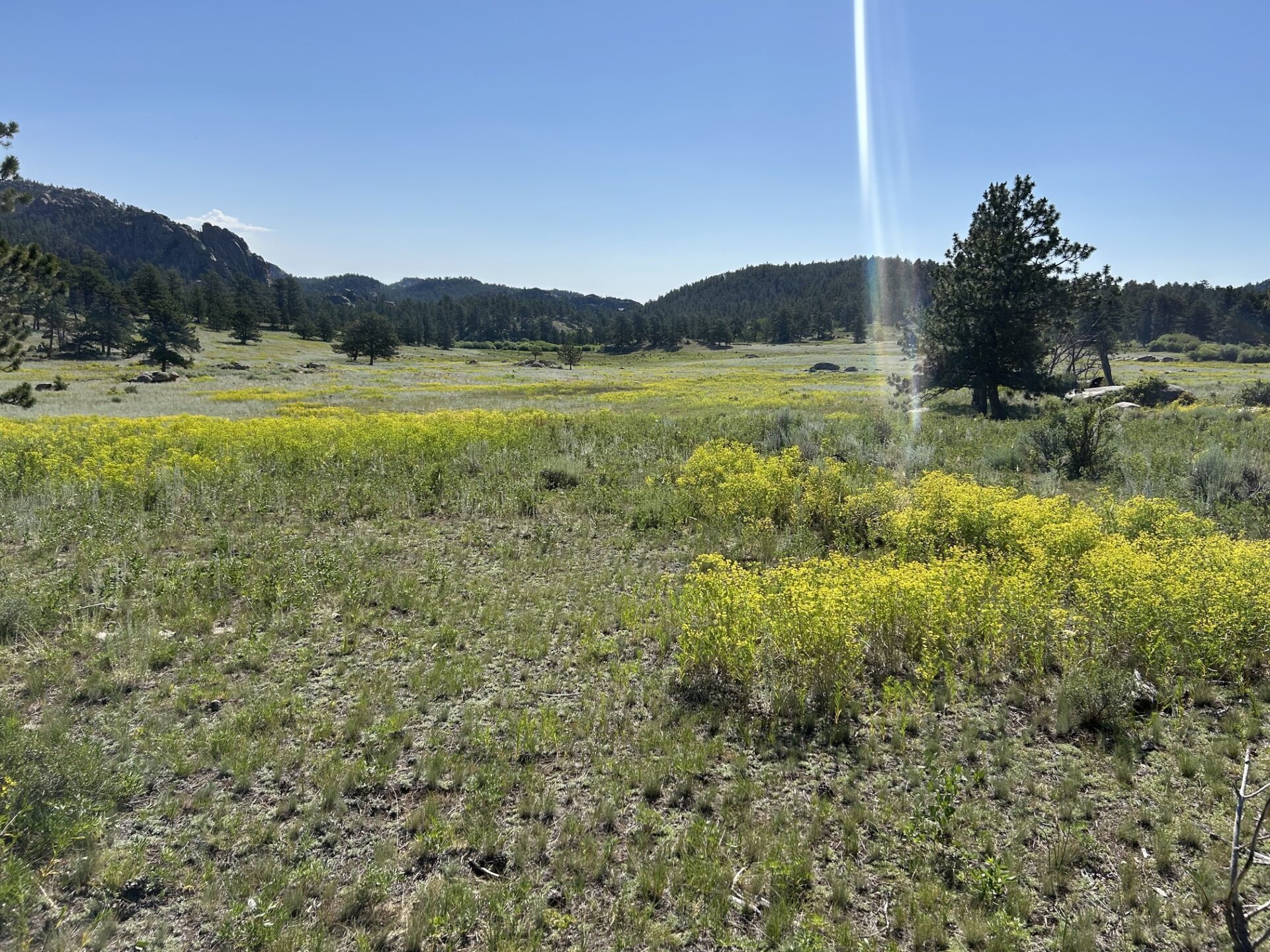
Spotting Leafy Spurge and Hoary Cress This May
As the Front Range transitions into the vibrant greens of May, Northern Colorado landowners are witnessing more than just the return of native grasses. This window marks the critical emergence of two of our region’s most persistent “early risers”: Leafy Spurge (Euphorbia esula) and Hoary Cress (Lepidium draba), commonly known as Whitetop.
For the proactive land manager, early identification is not just an ecological exercise—it is a financial and operational necessity. Understanding these species now, before peak flowering, can save years of expensive remediation and prevent the degradation of valuable acreage.
Leafy Spurge: The Resilient Invader
Leafy Spurge is a deep-rooted perennial that is notoriously difficult to eradicate once established. Its ability to thrive in diverse soil types, from the riparian corridors of the Poudre River to the drier, clay-heavy rangelands, makes it a formidable opponent for any property owner.
Key Identification Characteristics:
- Yellow-Green Bracts: While often mistaken for flowers, the showy, heart-shaped, yellowish-green structures at the top of the stem are actually bracts. The true flowers are small and inconspicuous, tucked within these colorful leaves.
- Milky Latex: A definitive trait of the Euphorbia family is the thick, white, milky sap that exudes from the stem or leaves when broken. Caution: This sap is a skin irritant for humans and can be toxic to cattle.
- Linear Leaves: The leaves are narrow, smooth, and arranged alternately along the stem, often appearing bluish-green before the plant fully matures.
Hoary Cress (Whitetop): The Early Bloomer
Hoary Cress is often one of the first weeds to bloom in Northern Colorado, frequently appearing as a dense “sea of white” in disturbed areas, pastures, and along roadsides. Its aggressive creeping root system allows it to form dense monocultures that outcompete native forage and sensitive riparian species.
Key Identification Characteristics:
- Flat-Topped White Clusters: The plant produces a profusion of small, four-petaled white flowers that give the plant a flat-topped, “hoary” (frosted) appearance.
- Arrowhead Leaves: The leaves are grayish-green and shaped like arrowheads, “clasping” the stem at the base without a stalk. This clasping nature is a primary diagnostic feature used to distinguish it from other mustard-family plants.
- Heart-Shaped Seed Pods: Late in the spring, the plant develops distinct heart-shaped seed capsules.
Why Early Detection Matters to Landowners
For private landowners, the “wait and see” approach is often the most expensive strategy available. In Northern Colorado, managing these species early is vital for several reasons:
- Economic Preservation: Noxious weeds significantly reduce the carrying capacity of rangeland for livestock and can decrease overall property values. Early treatment requires significantly less herbicide and fewer labor hours compared to managing a mature, multi-acre infestation.
- Ecosystem Balance: Both species are highly competitive. By the time they are in full bloom, they have already begun to sequester nutrients and moisture away from desirable native vegetation and forage grasses.
- Legal Compliance: Under the Colorado Noxious Weed Act, landowners have a legal responsibility to manage designated species. Both Leafy Spurge and Hoary Cress are high-priority targets for local weed districts and county inspectors.
The Path Forward
Effective land stewardship begins with a thorough walk across the property. Mapping these populations during their flowering phase allows for a surgical approach to management—prioritizing high-value areas and preventing the expansion of small satellite populations.
For landowners ready to transition from identification to action, partnering with a specialized firm can ensure that resources are deployed effectively and efficiently. Reaching out to Vegetation Management Resources for project estimates is a strategic next step to secure expert mapping and treatment oversight. By acting as an informed steward of your landscape today, you ensure the ecological health and financial value of your land for seasons to come.