
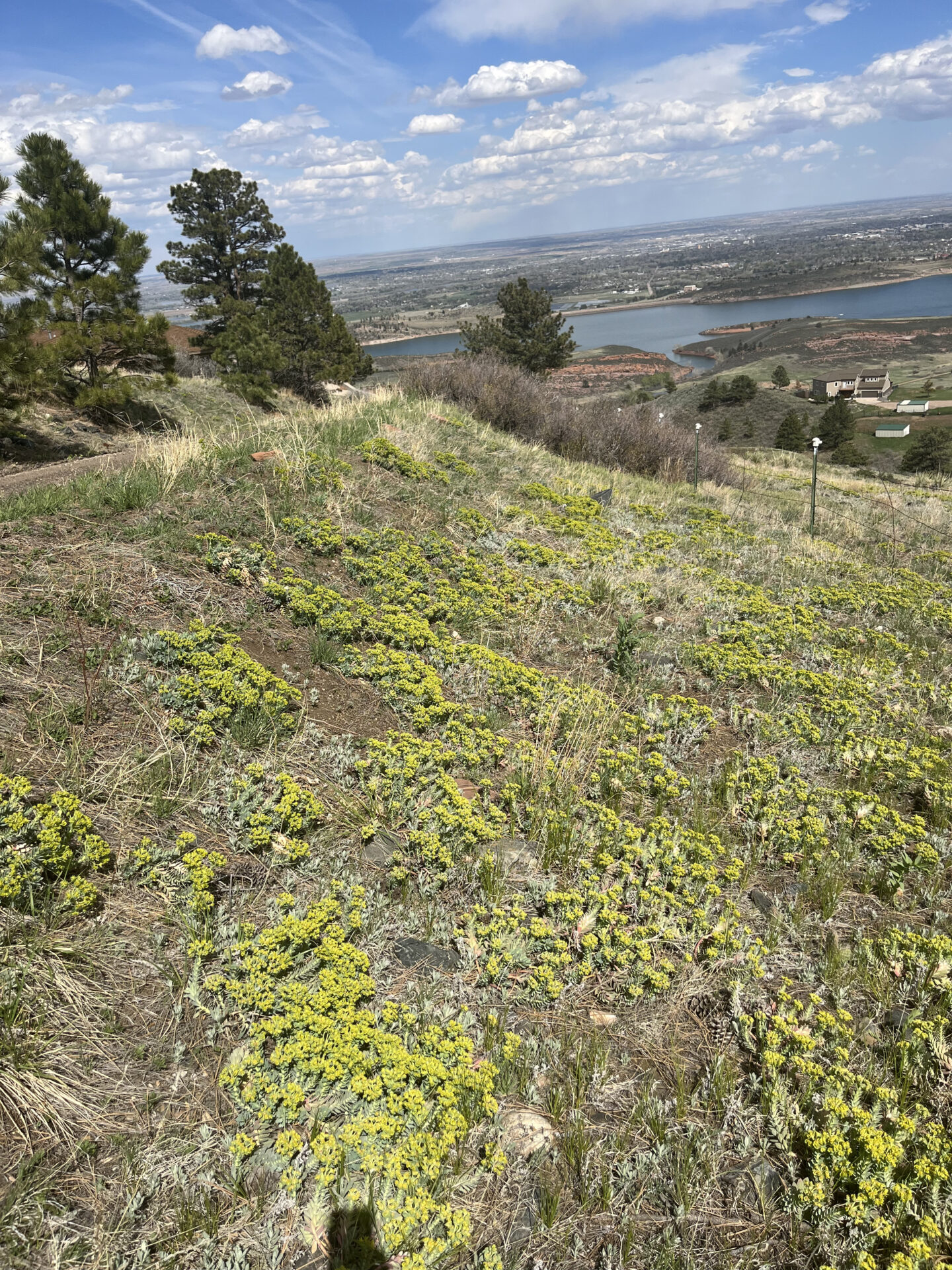
The Early Spring Invasion
While most of the Colorado landscape is still waking up from winter, one of the state’s most aggressive “List A” noxious weeds is already making its move. Myrtle spurge is an early-season opportunist, and if you aren’t looking for it now, you’re already behind.
A Beautiful Mistake with Mandatory Consequences
Once a darling of local nurseries for its “alien-chic” appearance and ability to thrive on steep, nutrient-poor slopes, Myrtle spurge has officially worn out its welcome. The Colorado Department of Agriculture has designated it a List A species, meaning eradication is not a suggestion—it is mandatory. This escaped ornamental has become a biological threat to our Front Range ecosystems, harming the local economy, degrading wildlife habitats, and posing a direct risk to human health due to its caustic, toxic sap.
The 60-Day Window of Opportunity
The danger of Myrtle spurge lies in its speed. It begins blooming in March and finishes by May. This narrow window is the only time the plant is truly easy to spot against the dormant brown of the foothills.
Missing this window is a multi-year setback because:
- Visibility: Once it stops flowering, it blends back into the landscape, making it nearly impossible to find each individual.
- The Seed Bomb: A single plant produces thousands of seeds that remain viable in the soil for eight years. If you let it go to seed this spring, you’ve just committed to an additional eight-years of monitoring.
Stop the Cycle Before It Starts
Effective management requires a proactive strike
- For Small Patches: Hand-pulling is effective, but caution is mandatory. Wear gloves and eye protection to avoid the irritating milky sap. If flowers have appeared, you must bag and dispose of the plants immediately—do not compost them.
- For Large Infestations: A selective broadleaf herbicide application is the gold standard for full-scale eradication.
Don’t Get Waitlisted
As the weather warms, vegetation management specialists see their schedules fill-up quickly. If you wait until the peak of summer to address your foothills or acreage, the ideal flowering window will have already closed, and the seed bank will be replenished.
The clock is ticking. Formulation of your treatment plan needs to happen now—before the first seeds drop.